


Smart Green Wall

The climate is changing, and many regions are increasingly grappling with problems such as heavy rainfall, prolonged periods of drought, and heat accumulation. However, issues such as air pollution—caused by particulate matter, CO₂, and nitrogen—as well as rising traffic noise also pose significant challenges, particularly in urban areas. For this reason, effective, climate-oriented adaptation measures are becoming increasingly urgent.
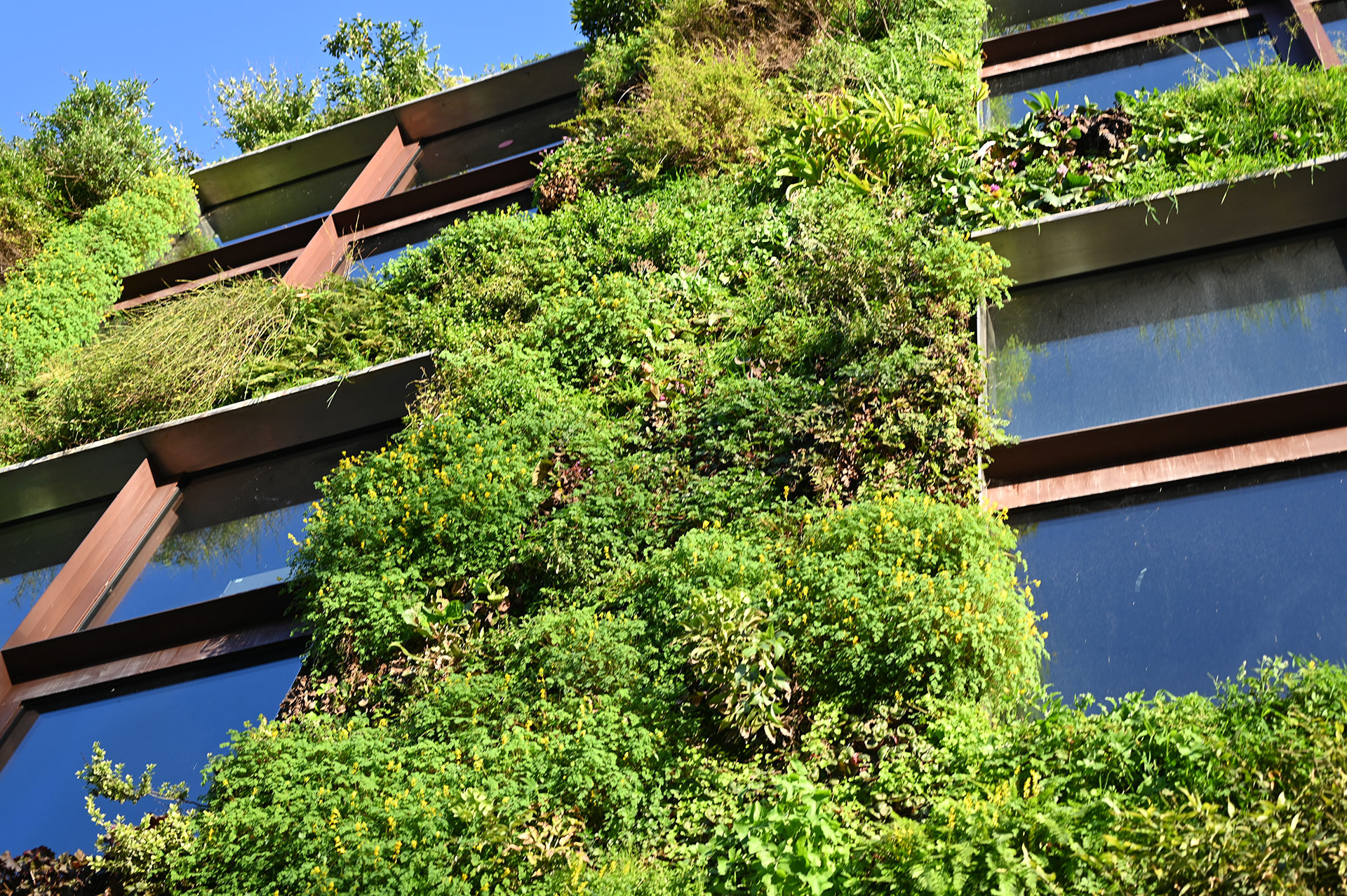
Solutions designed to improve the microclimate are already available on the market. These include, for instance, vertical gardens—specifically, vegetated walls where plants, unlike in traditional gardens, grow vertically (e.g., on building facades). These vertical gardens actively contribute to air quality improvement by enabling a substantial reduction in temperature, noise, CO₂, and pollutants. To date, however, these systems have been associated with high supply and maintenance costs, which often leads to decisions against their implementation—and, consequently, to the forfeiture of their positive effects.
To bring about a shift in mindset, a university has joined forces with six German and Dutch SMEs as part of the “Smart Green Wall” project. Over the course of the project, they are developing durable products and services for the automated supply and remote maintenance of vertical gardens. Their objective is to use these innovations to reduce operating costs, thereby fostering the widespread adoption of “green walls.”
The “Smart” in the project’s name refers to AI- and sensor-based management systems that facilitate the autonomous monitoring and maintenance of the gardens—as well as the care of the plants—through integrated technological frameworks. The primary focus of these management systems lies in the efficient utilization of readily available resources, such as energy and water. For example, all greywater and rainwater is filtered, stored, and reused within a closed-loop system to irrigate the vertical gardens. This approach also serves to mitigate the adverse effects of heavy rainfall events. Meanwhile, the integrated solar panels and battery systems ensure the system’s energy independence. The integration of 5G connectivity enables high-speed, just-in-time data transmission and, furthermore, unlocks additional functionalities—such as support for traffic monitoring and control, as well as autonomous driving.
Moreover, the potential applications of vertical gardens are being expanded through the targeted adaptation of plant communities and the optimization of substrates for diverse uses and climatic zones. Thus, “Smart Green Wall” gardens not only visually enhance the urban landscape in a wide variety of locations but also simultaneously improve the quality of life for citizens: Green facades improve air quality, reduce noise pollution, cool the living environment, and foster greater biodiversity within the urban fabric. They have a positive impact on a city’s image, positioning these locations as hubs committed to sustainable urban development, economic innovation, ecological responsibility, and social value creation.



Consortium